
Memble

Too much to learn.No room to fall behind.

Forty hours of lectures every week. Poor audio, overwhelming material, constant deadlines, and classmates competing for the same grades. Memble turns it into a clear, complete study system, so you stay prepared, ahead, and in control.

Upload my lecture

See the result first ↓

A transcript you can’t trust isn’t a study tool.

Clova and Daglo turn the recording into text. Memble turns it into the lecture: every sentence on its slide, medical terms spelled the way your exam spells them, the um, uh, fillers hidden in one press, and an exam key and a quick summary for every slide. Where the professor misspoke or the recording can’t be made out, it is marked, and one tap asks about it: the answer knows your whole lecture and shows the slide it’s from.

혈관을 통한 백혈구 이동의 복합 과정
#13

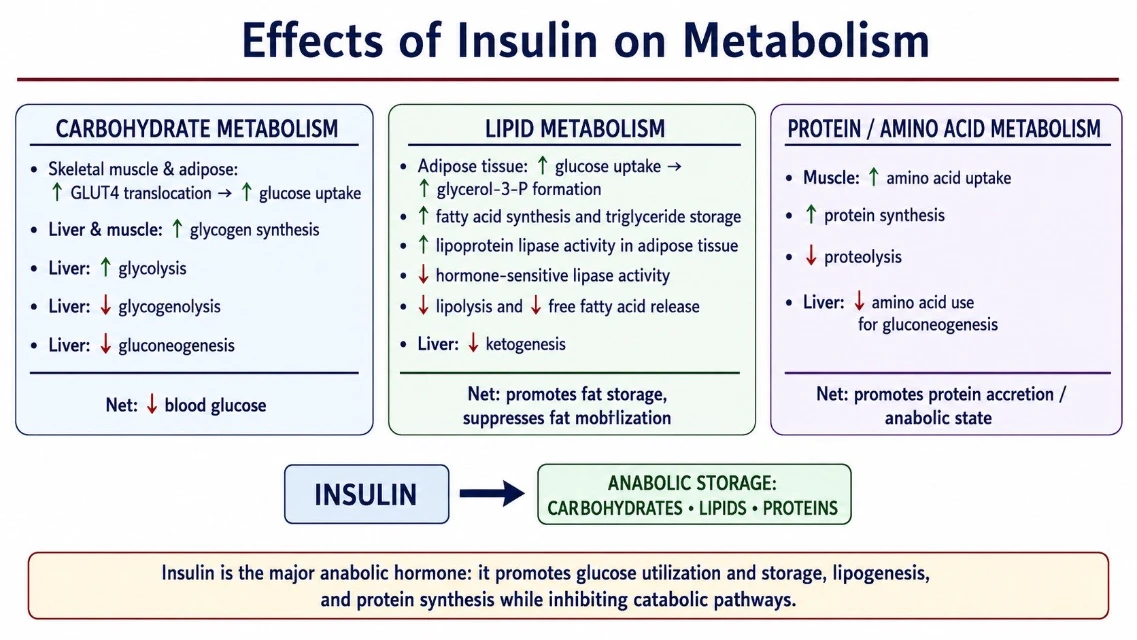
Effects of Insulin on Metabolism

어 이번에는 그 insulin이 전체 대사에 어떤 영향을 주는지 정리가 되어 있는데, insulin은 기본적으로 파라볼릭 호르몬, 즉 영양분을 사용하고 저장하는 방향으로 작용하는 호르몬이죠. 먼저 탄- carbohydrate metabolism을 보면 어 skeletal muscle과 adipose tissue에서는 GLUT4 translocation을 증가시켜 glucose uptake를 증가시킵니다. 그리고 liver와 muscle에서는 글코- glycogen synthesis를 감소시키고요 (증가시키고?). 간에서는 glycolysis를 증가시키는 반면에 glycogenolysis와 gluconeogenesis는 억제합니다. 그래서 최종적으로 혈당을 낮추는 방향으로 작용을 하고 lipid metabolism에서는 지방을 분해하기보다는 저장하는 쪽으로 작용을 합니다. adipose tissue에서 glucose uptake를 증가시키고 fatty acid와 triglyceride triglyceride synthesis를 증가시킵니다. 반대로 hormone-sensitive kinase를 (lipase?) 억제해서 lipo lipolysis와 free fatty acid release를 감소시키고요. 간에서는 ketogenesis도 감소시킵니다. protein metabolism도 마찬가지입니다. muscle에서 amino acid uptake와 protein synthesis를 증가시키고, 반대로 proteolysis는 억제합- proteolysis는 억제합니다. amino acid를 gluconeogenesis에 사용하는 것도 감소시킵니다. 어쨌든 insulin은 저장하는 호르몬이에요. 탄수화물은 glycogen으로, 지방은 trig- triglyceride로, amino acid는 프로- protein으로 저장하게 만드는 호르몬이니까, 즉 식후에 들어온 영양분을 분해해서 쓰기보다는 합성하고 저장하는 anabolic state를 만드는 호르몬이라고 생각하시면 됩니다.

Demo lecture recorded for Memble, processed by the production version with no manual fixes. Made for the way Korean medical lectures actually sound.

Your classmate may already have it.

If a classmate has put the lecture on Memble, their link opens the whole thing instantly: no recording to upload, no waiting. And every classmate who opens yours gives that lecture back to you.

Bad recording. Started late. Still works.

Upload the PDF from your LMS and your recordings in lecture order. The file from the class chat works as it is, up to 4 h 30 min.

What you upload

생리학_내분비_4강.pdf13 slides
1KakaoTalk_Audio_1402.m4a15:47
2새 녹음 2.m4a7:32

Recordings · 23:19

  • Recording started late
  • Ended before the lecture did
  • Recorded in two parts
  • YouTube played mid-lecture
  • Professor jumps back to an earlier slide

What you get

Slide-by-slide lecture

0:00–1:30Before the slides

대한민국 내분비학 강의 인슐린, 글루카곤, 당뇨병 타임스탬프 기반 전사: KATP channel 혹은 ATP-sensitive potassium channel 이것을 닫게 됩니다. Close하게 되면어, 네. 어, 수업 시작할게요. 네. 어, 오늘 생리학 내분비 네 번째 시간이죠? 네. 예, 본과 1학년 강의실 맞죠? 하하. 예전에는 강의실을 잘못 들어간 적이 있어 가지고, 예. 그리고 출석은 수업 끝나가 중간에 부르는 걸로 할게요. 안 부를 수도 있어요. 워낙 인원이 많아 가지고. 네, 오늘 endocrine pancreas의 insulin, glucagon, 당뇨병까지 다루는 강의를 할 거고, 어, physiology 교과서 다들 있나요? 그 chapter 75 그리고 그 식욕 조절에 대해서는 chapter 72에 나와 있는데 저는 여기 책이 있어서 여기 학습 목표가 뭐라고 쓰여 있는지 한번 읽어만 볼게요. 여기 보면 이자의 위치, 해부학적 구조, 뭐 Langerhans섬의 세포 구성과 호르몬 분비에 대해서 설명할 수 있고, insulin, glucagon의 생합성과 분비의 조절, 표적 세포에서의 작용 기전, 생리적 효과를 설명할 수 있어야 합니다. 혈당의 조절 과정을 잘 이해하고 여러 가지 호르몬과 전체 대사 작용에서 그 통틀어서 설명할 수 있어야 하고요. 당뇨병에 대해서 이해하고 정의할 수 있으며 병리적 기전을 이해하여 당뇨병의 진단법과 또 치료법에 대해서 열거하고 설명할 수 있어야 한다. 뭐 이렇게 돼 있네요. 네, 오늘 이런 거 할 거예요.

History of insulin and diabetes mellitus
#1

History of insulin and diabetes mellitus

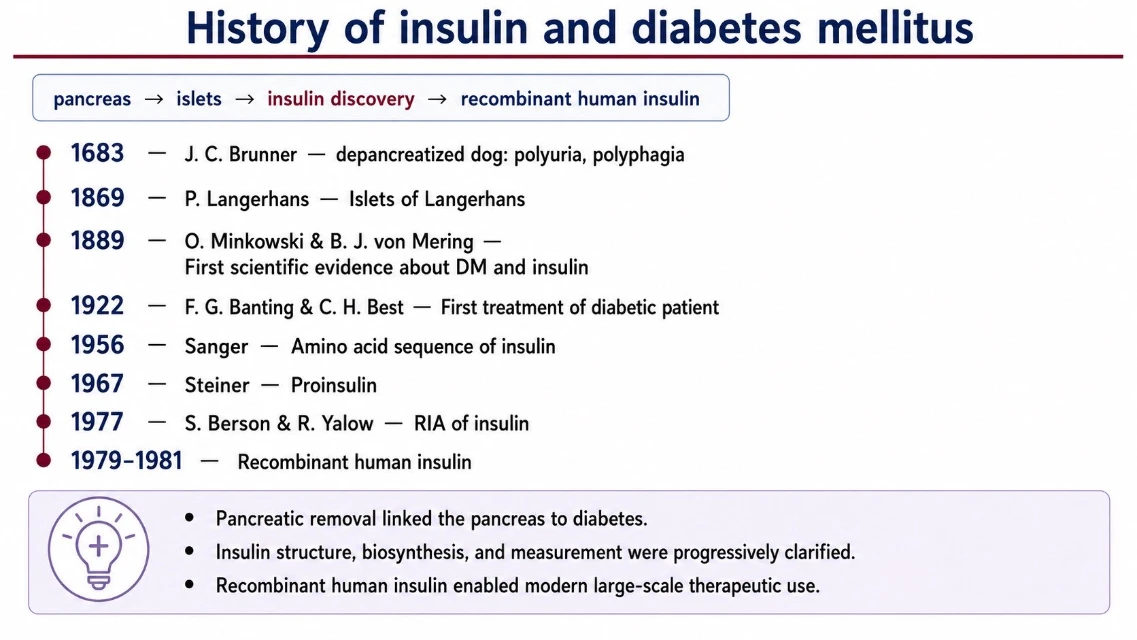
그 pancreas의 anatomy에 대해서. 그 insulin과 diabetes mellitus의 그 역사를 먼저 한번 보게 되면 1683년에 Brunner라고 하는 사람이 depancreatized dog을 만들어서 pancreas가 관련이 있다는 것을 알게 됐고요. 1869년에 Langerhans가 Islet of Langerhans를 발견을 하게 됩니다. 여기는 워낙 들어 본 것도 많고 뒤에서 더 이야기가 나오는 게 있을 거니까 간단히 읽어 보시면 좋을 것 같습니다.

Original recombinant human insulins
#2

Original recombinant human insulins

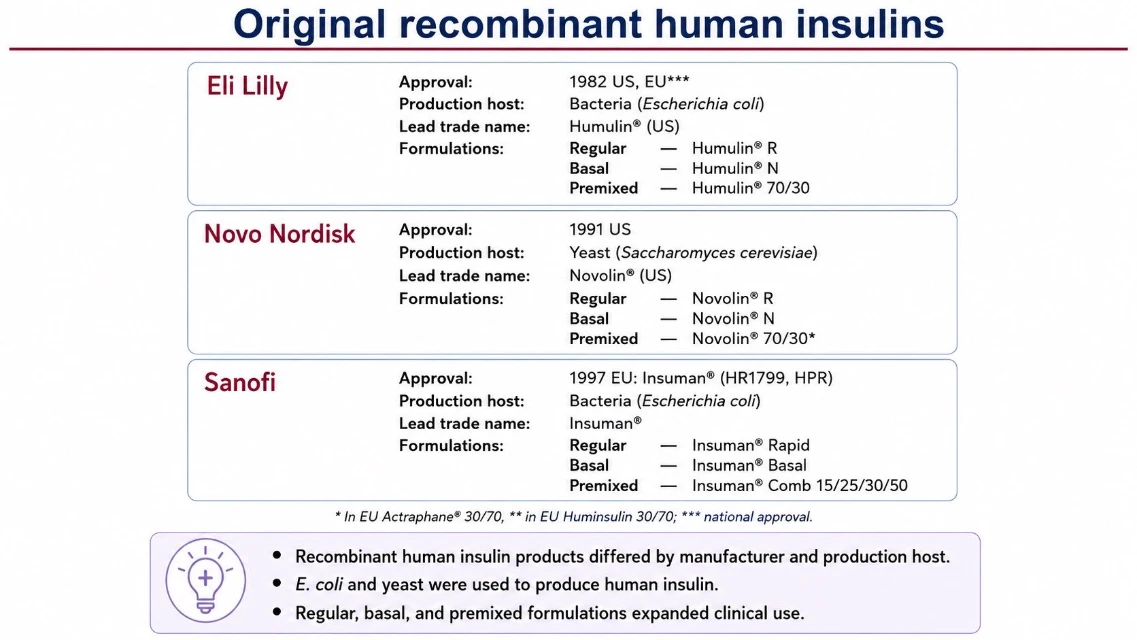
어 어, recombinant human insulin이 실제 치료로 사용되기 시작한 과정을 보여 주는데요. 1979년에서 81년경부터 사람의 insulin을 recombinant protein 형태로 만들어 사용할 수 있게 되었고요. 대표적으로 Eli Lilly가 1982년에 E. coli를 이용해서 human insulin을 생산했고 이것이 이제 Humulin입니다. 반면 Novo Nordisk에서는 yeast를 이용해서 생산을 했는데 Novolin이라는 제품으로 나왔어요. 이후 Sanofi에서도 또 이제 제품을 개발하게 되고요. 이렇게 recombinant 기술이 도입되면서 사람 insulin을 대량으로 생산할 수 있게 되었고 regular, basal 아, basal, premix 형태의 다양한 insulin 주사제가 만들어져서 치료에 사용되기 시작했다는 겁니다.

Discovery of Insulin
#3

Discovery of Insulin

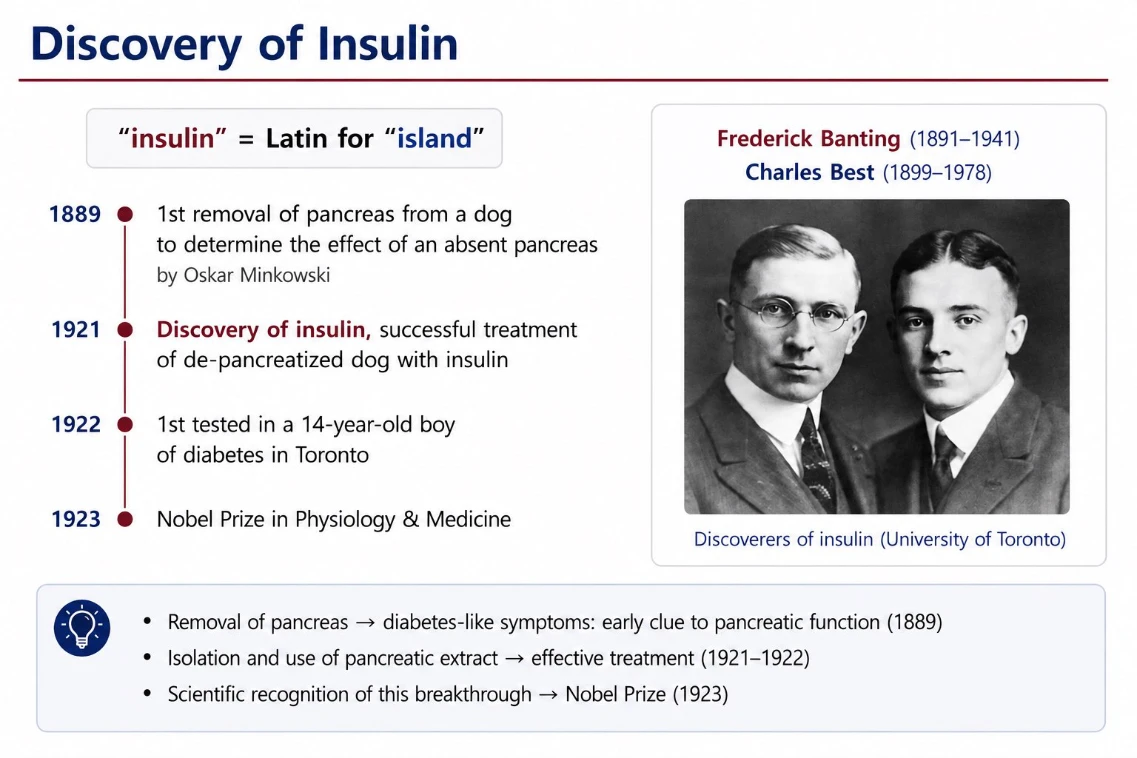
어 인슐린은 라틴어로 island라고 하는 그런 뜻을 가지고 있고요. 1889년에 Minkowski가 depancreatized, 그러니까 pancreas를 떼어내고 나서 그 개에다가 개에서 보니까 pancreas에서 나오는 어떤 물질이 관련이 있다. 당뇨 증상하고 관련이 있다는 것을 이제 발표를 하고 나서, 21년에 Banting과 Best라고 하는 젊은 과학자가 이 처음 insulin을 발견을 하게 됩니다. 그래서 거기에서 분리를 해서 pancreas를 떼어낸 그 dog에다가 insulin을 주사를 했더니 바로 증상이 없어졌다 하는 것으로 이제 발견을 하게 되었습니다. 바로 다음 해 22년에 이것을 이용해서 당뇨 환자, 아마 1형 당뇨였을 텐데 1형 당뇨 환자였던 아이에게 insulin을 주사해서 치료했습니다. 요즘 같으면 이게 이렇게 빨리 될 수가 없는데요. 어쨌든 이들은 그 다음 해인 23년에 바로 노벨상을 받게 됩니다. 근데 Banting과 노벨이 아, Banting이 Nobel Prize를 받고 Best는 못 받았습니다. Banting과 그 스승이 받게 되는데요, Best가 당시에 노벨상 후보로 지명되지 않았기 때문이라고 하는데 Banting이 Best에게 상금 절반을 나누어 줬다고 하긴 합니다.

Anatomy and Physiology of the Pancreas
#4

Anatomy and Physiology of the Pancreas

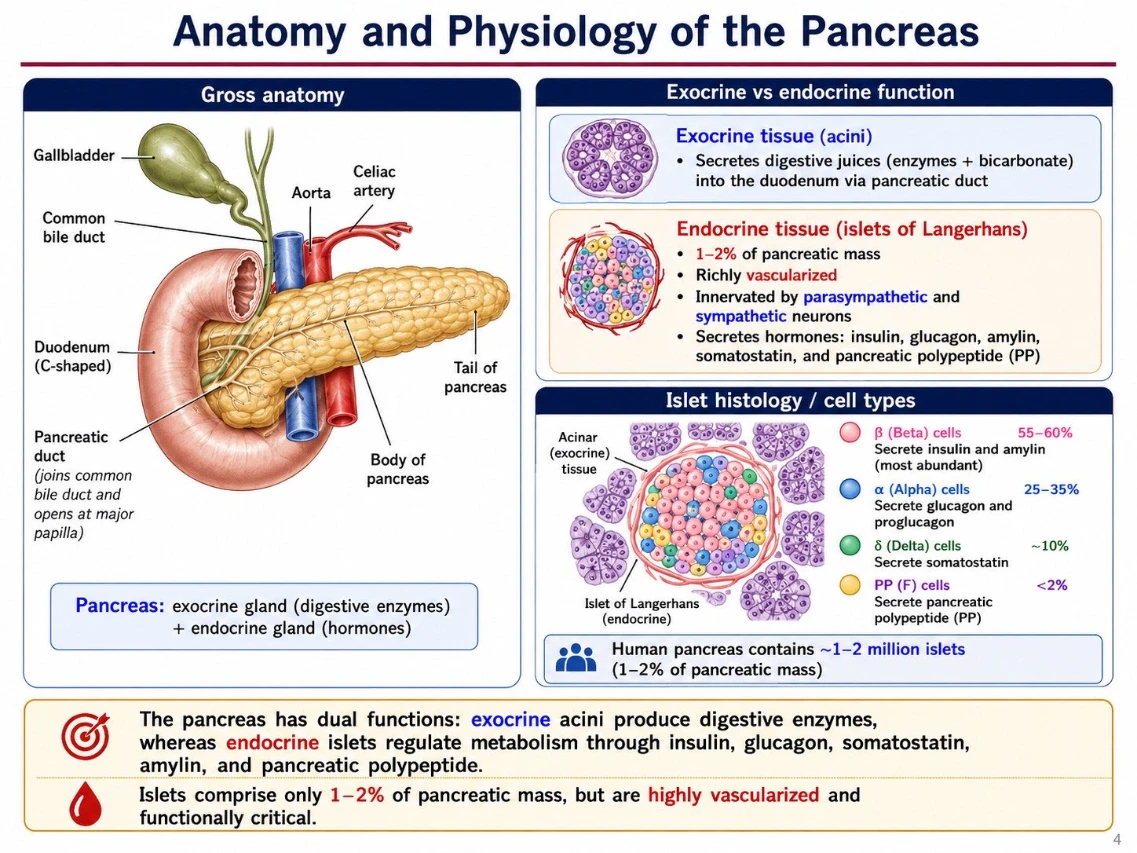
그 자, pancreas, 췌장의 anatomy와 physiology를 간단히 보고 가겠습니다. 다 해부학 시간에 배웠을 거예요, 그죠? 간단히 보고 가겠습니다. 췌장의 위치나 anatomical한 부분은 넘어가고 분비 부분을 봅시다. 먼저 대부분의 췌장 조직을 차지하고 있는 것은 exocrine tissue, 즉 acinar cell들이죠. 이 세포들은 소화 효소와 bicarbonate 같은 물질을 만들어서 pancreatic duct를 통해 duodenum으로 분비합니다. 그러니까 관을 통해 장관으로 분비되는 것이기 때문에 외분비라고 하는 거죠. 반면 우리가 insulin을 공부하면서 더 중요하게 봐야 되는 것은 endocrine tissue, 즉 islet of Langerhans, 랑게르한스섬입니다. 그림을 보면 주변에 있는 대부분의 조직이 acinar tissue이고 그 사이사이에 둥글게 모여 있는 세포 집단이 이제 islet이에요. 이게 전체 pancreas에서 차지하는 비율은 굉장히 작아요. 췌장 질량의 약 1~2% 정도밖에 되지 않습니다. 사람 한 명의 pancreas에는 대략 1~2 million, 100만~200만 개 정도의 islet이 있다고 생각하면 됩니다. 이게 양은 적지만 굉장히 중요한 조직입니다. 특히 islet은 혈관이 매우 풍부하게 분포되어 있습니다. 왜 그럴까요? 바로 여기에서 만들어진 호르몬을 duct로 보내는 게 아니라 바로 혈액으로 분비해야 하기 때문이죠. 그리고 parasympathetic과 sym- sympathetic 뉴런의 innervation도 받아서 자율신경계에 의해서도 호르몬 secretion이 조절됩니다. 자, 그럼 islet 안에 어떤 세포가 있느냐를 봅시다. 가장 많은 것이 β세포, beta cell입니다. 전체 islet cell 전체, 아, 대략 50~60% 정도를 차지하고 우리가 앞으로 집중해서 볼 insulin과 amylin을 분비합니다. 그다음이 α세포, alpha cell이고 대략 25~35%. 이 세포에서는 glucagon이 분비되죠. insulin이 혈당을 낮추는 방향으로 작용한다면 glucagon은 반대로 혈당을 올리는 방향으로 작용하기 때문에 이 두 호르몬이 서로 균형을 이루면서 glucose homeostasis를 유지한다고 보면 됩니다. 그 여기 델타, delta cell이 10% 정도 있고 여기서는 뭐가 나오죠? somatostatin이 분비되죠. somatostatin은 주변 endocrine cell의 호르몬 secretion을 역 조-, 어, secretion을 억제하는 조절 역할을 하죠. 마지막으로 PP cell 또는 F cell이 있는데 비율은 2% 미만이고 pancreatic polypeptide, PP를 분비합니다. 이 중에서 우리가 주로 볼 것은 그중에서도 beta cell이 분비되는 insulin이죠. 뭐 당연히 여기를 보겠죠? 그 glucose가 올라갔을 때 어떻게 분비되고, 뭐 target tissue에서 signaling pathway를 통해 어떻게 작용하는지 이런 순서대로 이제 다루도록 하겠습니다.

Structure of Insulin
#5

Structure of Insulin

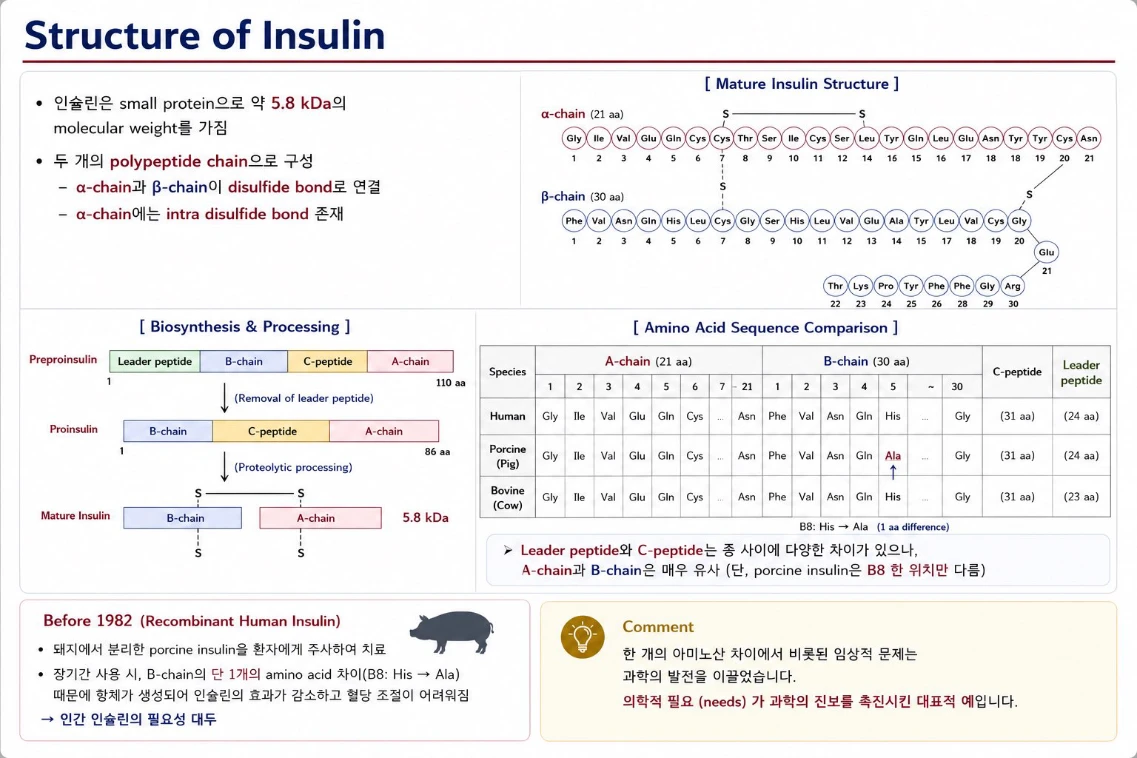
insulin의 구조입니다. insulin은 small protein으로 약 5.8 kDa 정도의 molecular weight를 가지고 있고요, 두 개의 polypeptide chain으로 이루어져 있습니다. 여기서는 α chain, β chain이라고 표현이 되어 있는데 정확한 표준 명칭은 α chain과, 아 A chain과 B chain입니다. 어, 췌장의 α cell, β cell과 헷갈리지 않도록 구별하시면 좋겠고요. 그 A chain과 B chain이 disulfide bond로 연결되어 있고 A chain 안에는 intra disulfide bond가 존재하고 있습니다. leader peptide와 β chain 그리고 connecting peptide, C-peptide, α chain으로 전체의 구조는 우리가 preproinsulin이라고 얘기합니다. 어, 네, leader peptide가 잘라지면 proinsulin이 남고 여기 완전히 process out 되면은 α와 베타만 남-, β만 남는 insulin이 되겠습니다. 이것을 human, pig, bovine, 아 저거 소지요, 그것의 그 amino acid sequence를 서로 비교를 했을 때 leader sequence하고 그 C-peptide sequence는 variation이 서로 많이 있는 데 비해서 α하고 β는 아주 유사하지만 homology가 굉장히 높습니다. 하나의 amino acid만 달라지게 되는데, 그래서 82년에 human insulin이 만들어지기, 그 recombinant DNA technique으로 만들어지기 전에는 그 pig에서 분리를 해 가지고 그거를 환자한테 in-, injection 하는 그런 방법을 사용을 했었어요. 어 어 이게 계속 사용할 수 있었으면 좋았을 텐데 이게 pig insulin을 계속 어 맞게 되면은요, 이렇게 amino acid 하나 차이 때문에 항체가 생겨서 더 이상 insulin이 작용을 하지 못하고 혈당 조절이 안 되게 되어 있습니다. 그래 human insulin을 만들 수밖에 없고 사람한테서 분리를 할 수 없었기 때문에 recombinant DNA technique을 이용을 하게 된 것입니다.
Biosynthesis of Insulin
#6

Biosynthesis of Insulin

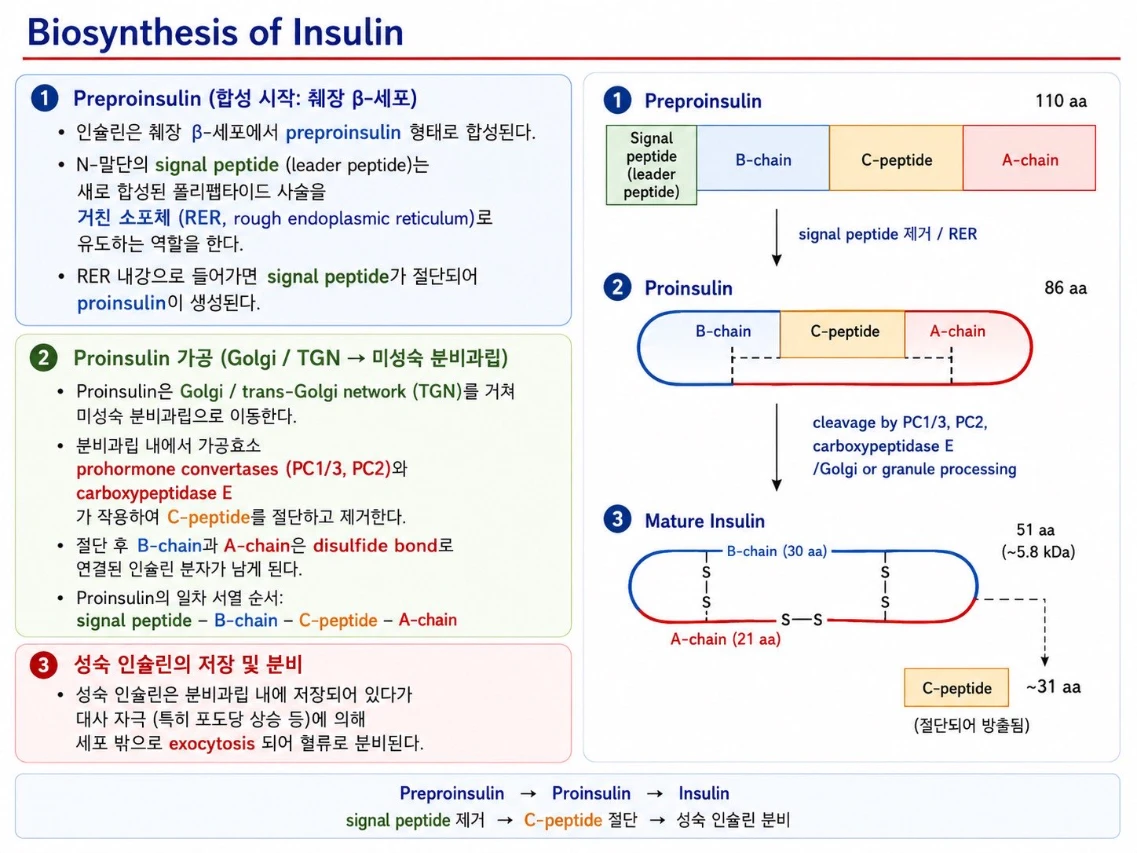
아, insulin의 biosynthesis를 볼게요. insulin은 췌장의 beta cell에서 처음 preproinsulin 형태로 합성됩니다. N-terminal에 있는 signal peptide가 새로 합성된 peptide를 그 RER로 유도하고요, RER 안으로 들어가면 signal peptide가 제거되면서 proinsulin이 됩니다. proinsulin은 B chain, C-peptide, A chain이 하나로 연결된 구조이고 이후 Golgi를 거쳐서 여기서 secretory granule로 이동하면서 PC1/3, PC2 carboxypeptidase E에 의해 C-peptide가 잘려 나가고 최종적으로 알파 (A?) chain과 B chain이 disulfide bond로 연결된 mature insulin이 만들어집니다. 이 이 insulin과 C, C-peptide는 분비과립에 저장되어 있다가 혈당이 올라가면 같이 분비되는데 그래서 임상적으로 C-peptide를 측정하면 환자 자신의 beta cell에서 endogenous insulin이 얼마나 분비되고 있는지 평가할 수 있어요. insulin level을 측정을 하면 혈액 속 insulin 농도를 직접 보는 건데, 근데 환자가 외부에서 insulin을 많이 주사를 맞고 있어. 그러면 endogenous insulin과 exogenous insulin을 구분하기 어렵고 insulin은 간에서 first-pass metabolism을 많이 받아 농도 변동도 커요, 몸 안에서. 반면 C-pep-, 아, 반면 C-peptide는 proinsulin이 insulin으로 가공될 때 insulin과 거의 일대일로 같이 분비가 되는데 그래서 우리가 주사하는 일반적인 인슐린 제제에는 C-peptide가 들어, C-peptide가 들어 있지 않습니다. 그래 C-peptide를 측정하면 환자의 beta cell이 실제로 insulin을 얼마나 만들어 내고 있는지 즉, endogenous insulin secretion을 평가할 수 있다.

Overall Process of Insulin Secretion
#7

Overall Process of Insulin Secretion

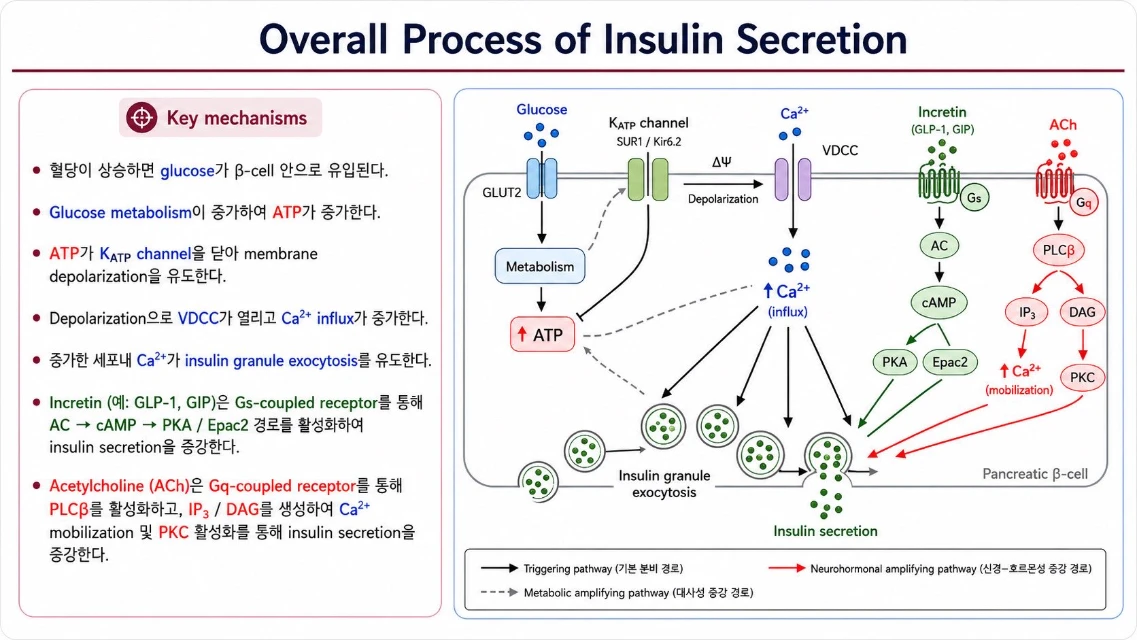
인슐린이 pancreatic beta cell에서 어떻게 secretion 되느냐 하는 기전을 보도록 하겠습니다. 가장 기본적인 stimulus는 역시 glucose입니다. 혈당이 올라가면 glucose가 beta cell 안으로 들어가겠죠. 들어온 glucose가 대사되면서 ATP가 증가하게 되고 그렇게 되면 이 ATP가 ATP-sensitive potassium channel 얘는, 여기는 channel 안에 있는 potassium을 체내, 세포 밖으로 내보내는 그런 기능을 하는 channel인데 이거, 이것을 닫게 됩니다. close하게 되면 ATP-sensitive potassium channel이 닫히게 되면 탈분극하게 되죠. 원래 마이너스 안 안쪽이 마이너스, 바깥쪽이 플러스로 되어 있던 것이 이제 뒤집어지는 거죠, 탈분극. 안쪽이 플러스, 바깥쪽이 마이너스 하게 됩니다. 그렇게 되면 voltage-sensitive calcium channel이 이번에는 열리게 돼요. 이 원래 닫혀 있던 것이 탈분극에 의해서 열리게 되면은 바깥에 있던 calcium이 안쪽으로 밀려 들어가게 되고 intracellular cytosolic calcium 농도가 증가하게 되면은 이 vesicle이 plasma membrane 쪽으로 옮겨가면서 plasma membrane과 fusion하고 exocytosis에 의해서 insulin이 분비가 된다 하는 것이 그 기본 기전이 되겠습니다. 요약을 해 보면 blood glucose가 fasting 상태인 5 mmol보다 높아지게 되고 GLUT2를 통해서 glucose가 beta cell 내로 들어오게 되고 그것이 pyruvate로 pyruvate로 전환되고 TCA cycle을 통해서 대사되면서 ATP 농도가 높아지게 됩니다. 그러면 이 ATP가 ATP-sensitive potassium channel에 결합하게 되고 이어 채널이 닫 닫히고 막전위가 탈분극하게 되면 이때 voltage-sensitive calcium channel이 열리고 탈분극에 의해서 열리게 되고 이때 그렇게 되면 세포밖에 있던 calcium이 세포 내로 유 유입이 되고 그 증가된 세포 내에 칼슘에 의해서 insulin 분비 세포가 막과 fusion하게 (과립이 세포막과 fusion?) 되고 insulin이 세포 밖으로 분비된다. 이렇게 얘기할 수 있겠습니다.
How Insulin Secretion Is Inhibited
#8

How Insulin Secretion Is Inhibited

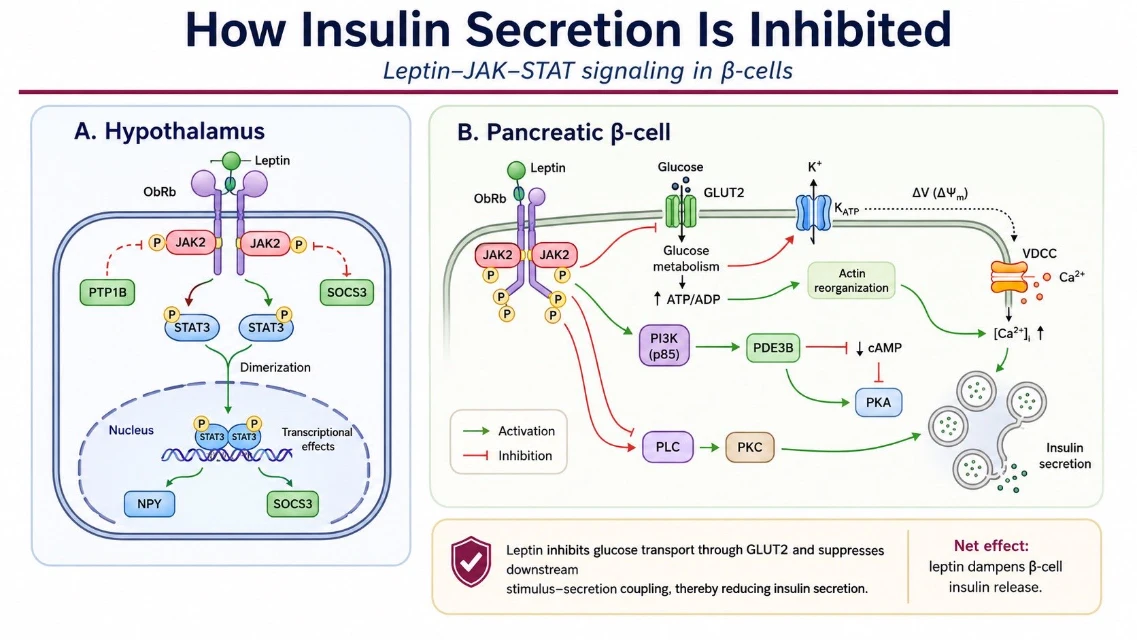
반면에 beta cell에서 leptin-JAK-STAT pathway가 activation이 되면 insulin secretion이 억제되는 과정을 볼 수가 있는데요. 이 과정은 glucose에 의해서 ATP-sensitive pathway에 의해서 닫히거나 이 pathway하고 PLC에 의해서, PKA에 의해서, 아 PKC에 의해서 insulin이 secretion 되는 거, 그 사이 cyclic AMP가 아 cyclic AMP에 의해서 insulin이 secretion 되는 이 pathway를 leptin이 receptor에 binding 해서 JAK-STAT pathway가 activation 되면은 activation 어 되면 glucose transporter를 억제하고 또 PKA activity를 억제하고 cyclic AMP가 만들어지는 것을 억제를 해서 secretion이 일어나지 않도록 하는 그런 과정을 이 leptin에 의해서 일- 일어나게 됐다는 것을 보여줍니다. 자 leptin은 주로 GLUT2에 (KATP 채널에?) 의해서 일어나는 glucose transport inhibition을 해서 그 subsequent event를 억제한다. insulin secretion을 억제한다라는 것을 어 알고 계시면 좋겠고요. JAK-STAT pathway에서 그 우리가 그 흔히 일반적으로 알고 있는 것은 JAK-STAT pathway가 activation이 되면 gene transcription을 activation 한다 라는 것은 우리는 앞에서 배워서 다 알고 있습니다. 이것을 이것은 hypothalamus에서 일어나는 일이고 어 JAK-STAT pathway가 액티 어 leptin에 의해서 activation 되면은 NPY라고 하는 neuropeptide Y 식욕 증진을 시키는 그런 peptide가 있는데 이것을 만들어 내는 (생성이 억제되는?) 게 이제 hypothalamus에서 일어나고 있다. 또 다른 pathway 또 JAK-STAT pathway가 두 tissue에 따라서 서로 다른 그런 signaling을 activation을 할 수 있다는 것을 보여주는 예로 이제 다른 수업에서 아마 보여주셨을 텐데 어 이제 leptin이 insulin secretion을 억제한다 하는 것을 여기서는 기억하고 넘어가시면 좋을 거 같아요.
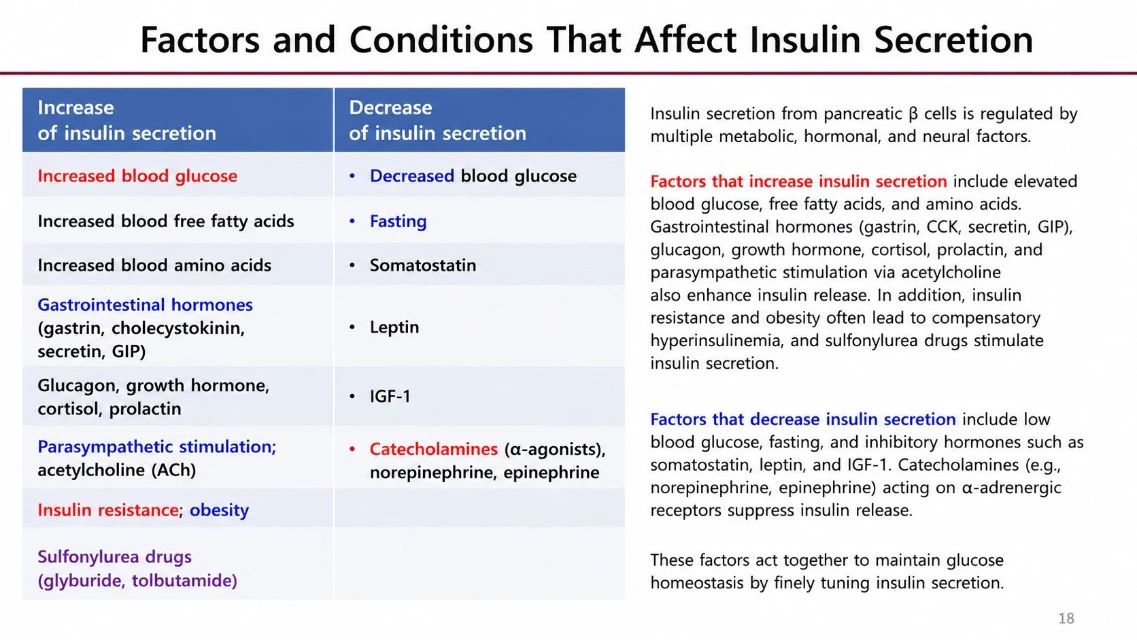
Factors and Conditions That Affect Insulin Secretion
#9

Factors and Conditions That Affect Insulin Secretion

자, 여기서는 insulin 분비를 증가시키는 요인과 감소시키는 요인을 정리해보겠습니다. 가장 기본적인 건 역시 혈당입니다. 혈당이 올라가면 insulin secretion이 증가하고, 반대로 혈당이 떨어지거나 fasting 상태가 되면 감소합니다. 그 외에도 free fatty acid나 amino acid가 감소하면 (증가하면?) insulin 분비가 증가할 수 있고요. 식후에는 gastrointestinal hormone 특히 GIP 같은 어 incretin 계열이 insulin secretion을 증가시킵니다. 또 parasympathetic 어 stimulation에서 나오는 acetylcholine도 insulin 분비를 촉진합니다. 호르몬 쪽에서는 glucagon, growth growth hormone, cortisol, prolactin 등이 insulin secretion을 증가시키는 방향으로 작용할 수 있고요. 어 이거 다 사실 배웠죠, 예전에? insulin resistance나 obesity에서는 보상적으로 hyperinsulinemia가 나타날 수 있습니다. 약물 중에서는 sulfonylurea가 알파 (베타?) 세포의 insulin secretion을 직접 증가시킵니다. 반대로 insulin secretion을 억제하는 요인에는 뭐 somatostatin, leptin, IGF-1 같은 것들이 있고요. 그리고 catecholamines 그 norepinephrine이나 epinephrine은 특히 알파-adrenergic receptor를 통해서 insulin secretion을 억제할 건데, 이것에 대해서는 나중에 더 자세하게 배울 거예요, 여러분들이.

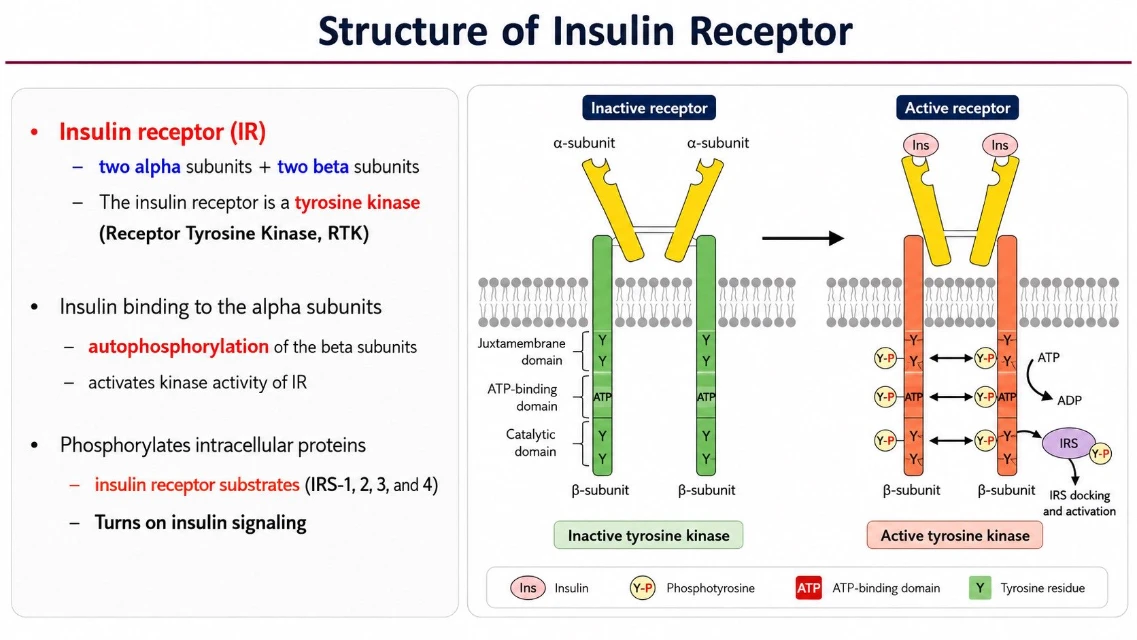
Structure of Insulin Receptor
#10

Structure of Insulin Receptor

insulin receptor의 구조를 보면은 insulin receptor는 두 개의 α subunit과 두 개의 β subunit으로 이루어져 있고, 중요한 건 이 receptor 자체가 receptor tyrosine kinase, RTK라는 겁니다. insulin이 세포 바깥쪽의 α subunit 자리에 결합하면 receptor의 구조가 변하면서 안쪽에 있는 β subunit의 tyrosine kinase activity가 활성화됩니다. 그러면 β subunit의 tyrosine residue들이 서로 autophosphorylation 되고, 이제 자가 인산화라고 하죠. 그 receptor가 활성화되면 다음으로 IRS, insulin receptor substrate를 phosphorylation 시킵니다. IRS가 활성화되면 그 아래에 있는 여러 signaling pathway가 연결되고, 결국 glucose uptake나 glycogen synthesis 같은 insulin의 다양한 효과가 나타나게 됩니다. 어 뭐 여기 이제 RTK 타 어 얘네 receptor tyrosine kinase가 어떻게 되는지 볼 건데요. insulin이 α subunit에 결합하면 β subunit의 tyrosine kinase가 활성화되고 뭐 receptor autophos- autophosphorylation 되고 이제 IRS insulin receptor substrate가 phosphorylation 되면서 시그널이 시작된다 라고 방금 얘기했죠.
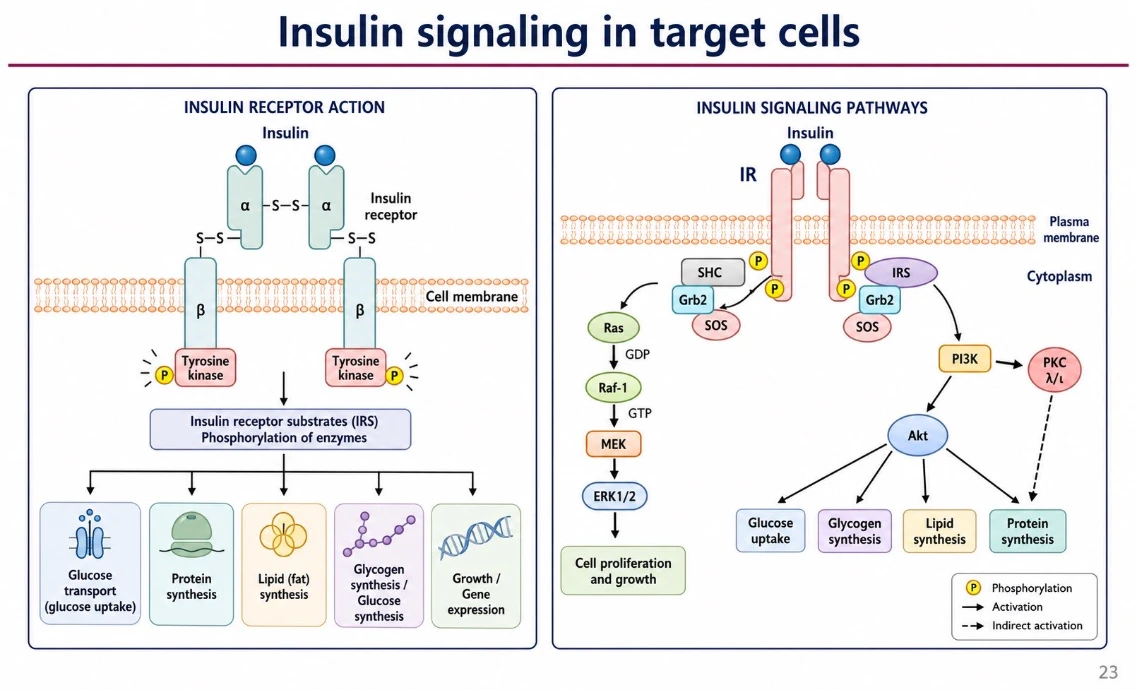
Insulin signaling in target cells
#11

Insulin signaling in target cells

여기서 이제 두 pathway가 나와 있어요. 이제 IRS PI3 아 PI3K Akt pathway인데, 이쪽이 insulin의 주된 metabolic effect를 담당합니다. glucose uptake를 증가시키고 들어온 glucose를 glycogen으로 저장하게 하고, 또 lipid synthesis와 protein synthesis도 증가시킵니다. 다른 하나는 Ras, Raf, MEK, 어 ERK, 즉 MAPK pathway인데, 이쪽은 gene expression보다는 metabolism (metabolism보다는 gene expression,?), cell growth, proliferation에 더 관련되어 있습니다. PI3K, Akt는 대사 작용, MAPK는 아 MAPK는 이제 growth, gene, growth와 gene expression이라고 먼저 기억을 해봅시다.
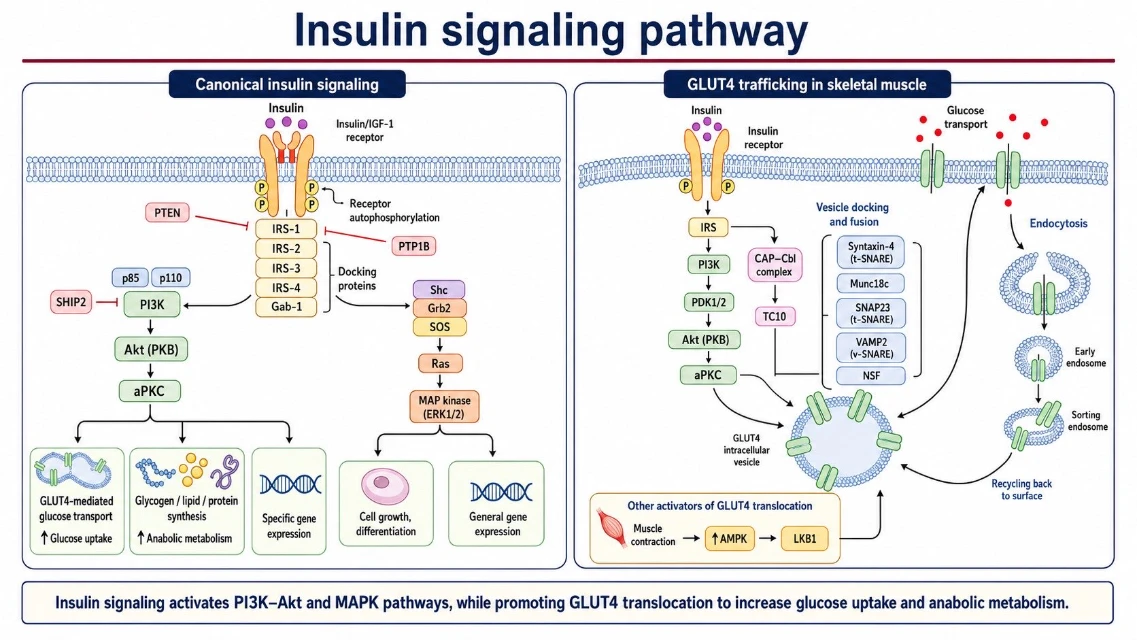
Insulin signaling pathway
#12

Insulin signaling pathway

그중에서 좀 더 자세하게 볼 건데 앞에 그림보다 약간 더 자세한 그림이 나와 있죠. insulin receptor가 활성화되면 IRS를 통해 PI3K가 활성화되고 이어서 Akt와 이제 atypical PKC가 활성화됩니다. 이 pathway의 중요한 결과 중 하나가 바로 GLUT4 translocation인데, GLUT4는 평소에 세포막에 계속 나와 있는 게 아니라 intracellular vesicle 안에 저장되어 있습니다. insulin signal이 들어오면 이 vesicle이 세포막 쪽으로 이동해서 docking을 하고 fusion 하면서 GLUT4가 plasma membrane에 삽입됩니다. 그리고 세포막에 glucose transporter가 많아지면서 glucose가 세포 안으로 더 더 많이 들어올 수 있게 되는 거죠. 이것은 특히 skeletal muscle과 adipose tissue에서 중요합니다. 그리고 insulin 자극이 없어지면 GLUT4는 다시 endocytosis 되어 세포 안으로 들어왔다가 필요할 때 다시 recycling 됩니다. 어 여기서 하나 더 볼 것은 이제 운동인데요. skeletal muscle에서는 insulin이 없어도 muscle contraction에 의해서 AMPK pathway가 활성화되면서 GLUT4 translocation이 증가할 수 있습니다. 그래서 운동을 하면 insulin과는 별개로 pathway를 통해서도 어 muscle glucose uptake가 증가할 수 있다는 거.

Effects of Insulin on Metabolism
#13

Effects of Insulin on Metabolism

어 이번에는 그 insulin이 전체 대사에 어떤 영향을 주는지 정리가 되어 있는데, insulin은 기본적으로 파라볼릭 호르몬, 즉 영양분을 사용하고 저장하는 방향으로 작용하는 호르몬이죠. 먼저 탄- carbohydrate metabolism을 보면 어 skeletal muscle과 adipose tissue에서는 GLUT4 translocation을 증가시켜 glucose uptake를 증가시킵니다. 그리고 liver와 muscle에서는 글코- glycogen synthesis를 감소시키고요 (증가시키고?). 간에서는 glycolysis를 증가시키는 반면에 glycogenolysis와 gluconeogenesis는 억제합니다. 그래서 최종적으로 혈당을 낮추는 방향으로 작용을 하고 lipid metabolism에서는 지방을 분해하기보다는 저장하는 쪽으로 작용을 합니다. adipose tissue에서 glucose uptake를 증가시키고 fatty acid와 triglyceride triglyceride synthesis를 증가시킵니다. 반대로 hormone-sensitive kinase를 (lipase?) 억제해서 lipo lipolysis와 free fatty acid release를 감소시키고요. 간에서는 ketogenesis도 감소시킵니다. protein metabolism도 마찬가지입니다. muscle에서 amino acid uptake와 protein synthesis를 증가시키고, 반대로 proteolysis는 억제합- proteolysis는 억제합니다. amino acid를 gluconeogenesis에 사용하는 것도 감소시킵니다. 어쨌든 insulin은 저장하는 호르몬이에요. 탄수화물은 glycogen으로, 지방은 trig- triglyceride로, amino acid는 프로- protein으로 저장하게 만드는 호르몬이니까, 즉 식후에 들어온 영양분을 분해해서 쓰기보다는 합성하고 저장하는 anabolic state를 만드는 호르몬이라고 생각하시면 됩니다.

22:50–23:18After the slides

어 이번 시간 이제 50분 됐죠? 이제 여기까지 하고 오늘 이제 쉬는 시간이죠. 쉬는 시간을 주라고 써 있어서, 써 있기에. 그전에 지금 출석 한번 불러볼게요. 전체 다 부르면 지금 여기 120명인데 120명인 거 같진 않지만, 여러분들의 이- 이걸 다 부르면 5분이 날아가요. 여러분들의 아까운 쉬는 시간을 낭비하지 않기 위해서 랜덤으로 열 명 정도만 불러볼까 합니다. 이걸 120명을 다 부르는 건 여러분들도 나도 힘들어요. 이게 상당히 일이야. 자 김민제

Start with one lecture.

Pay only to process new lectures. No automatic billing. What you have processed, and your notes, stay yours for free, forever.

Try on your worst recording

2 h 30 min of lectures

Usually two or three lectures, plus about 100 asks.

The professor mumbles. The phone is across the room. Memble still follows.

₩1,990/ one time

No automatic billing. Processed lectures and notes stay yours for free, forever. First lecture not right? Tell us within a day for a full refund.

Upload my lecture

You can’t understand the professor. But you’ll still be tested on it.

The recording may be unclear. The explanation may be difficult to follow. The exam still counts. Don’t let a bad lecture cost you your grade.

What the room heard

receptor the word you cannot make out되고,

mumbled, far from the mic

What got written down

A regular transcript

receptor 오토 포스 릴레이션되고,

Memble

receptor autophosphorylation되고,

The professor is naming autophosphorylation, the step the whole pathway on the slide starts from. A regular transcript hears a run of ordinary syllables instead, and the term is gone.

What the exam asks

Q7인슐린이 receptor의 α subunit에 결합하면 β subunit에서 이 일어나 IRS가 결합할 자리가 만들어진다.

  1. Dephosphorylation
  2. Autophosphorylation
  3. Proteolytic cleavage

A few things before you begin.

How long does it take, and how much does it cost?

For a slide PDF with recordings, processing takes roughly a quarter of the lecture’s length. Once the upload is handed over, you can close the tab and leave. ₩1,990 gets you 2 h 30 min of lectures, usually two or three, and about 100 asks. After that, 1 hour of lecture is 1,000 credits.

Why not use Daglo or CLOVA Note?

General transcription tools can make a recording searchable. But when difficult lecture audio turns important words and medical terms into incorrect text, you cannot study from it. Memble gives you a transcript you can study from, matched to the right slides and carried through to clear takeaways.

My professor is almost impossible to understand. Will Memble actually work?

That is the kind of lecture Memble is built for. Poor room audio, fast or mumbled speech, unfamiliar pronunciation, and Korean explanations filled with English medical terms.

What can I upload?

Upload a lecture video, or a slide PDF with one or more classroom recordings in lecture order. If the slides exist only inside the video, Memble recovers the slides shown there and turns the lecture into the same slide-by-slide study experience.

Is a summary enough for a medical exam?

Memble never replaces the lecture with a generic summary. Use the complete transcript when detail matters, the summary for review, and the takeaway when you need the point quickly.

What if the professor does not follow the slides properly?

Slides can be skipped, revisited, taught out of order, or interrupted by off-slide explanations. Memble follows what was actually taught and keeps it in the right place.

Are their transcripts really that different?

Listen to the same difficult recording and read the untouched outputs. If the technical terms are wrong, the difference is not cosmetic. One result is searchable. The other is studyable.

How can I trust Memble’s transcript?

The words are presented with their matching slide and linked audio. Anything still uncertain is visibly marked, so you check one exact moment instead of distrusting the entire transcript.

What do I get from one lecture?

A navigable deck with every slide, its matching explanation, the full transcript, a study summary, an exam takeaway, and linked audio.

Why not replay the recording at 2×?

Replaying a forty-hour lecture week creates another forty-hour job before studying even begins. Memble lets you return to the exact slide and explanation you need.

What happens to Korean-English medical terminology?

English terms stay in the English spelling you need to recognize on the slide and exam. You are not left decoding Korean phonetic guesses.

How does this help when grades are relative?

Everyone receives the same difficult lecture. The difference is how much of it they recover and actually understand. Memble helps you study the explanations and details others may never get back.

Can it keep up with a full lecture schedule?

Memble is designed around the weekly lecture load, not occasional meeting notes. Each recording becomes a permanent study deck instead of another file waiting to be replayed.

Will Memble tell me what matters for the exam?

Memble gives every slide a clear exam takeaway based on the printed material and the professor’s emphasis. Support for matching lectures against your past exams and problem sets is coming later.

Finish the notes. Keep the evening.

Upload my lecture

₩1,990 · 2 h 30 min of lectures · no automatic billing · first lecture refundable within a day

Used by medical students at KHU, SNU, Yonsei and CHA.

Upload my lecture